




























What to Know About Homeowners Insurance Claims for Theft
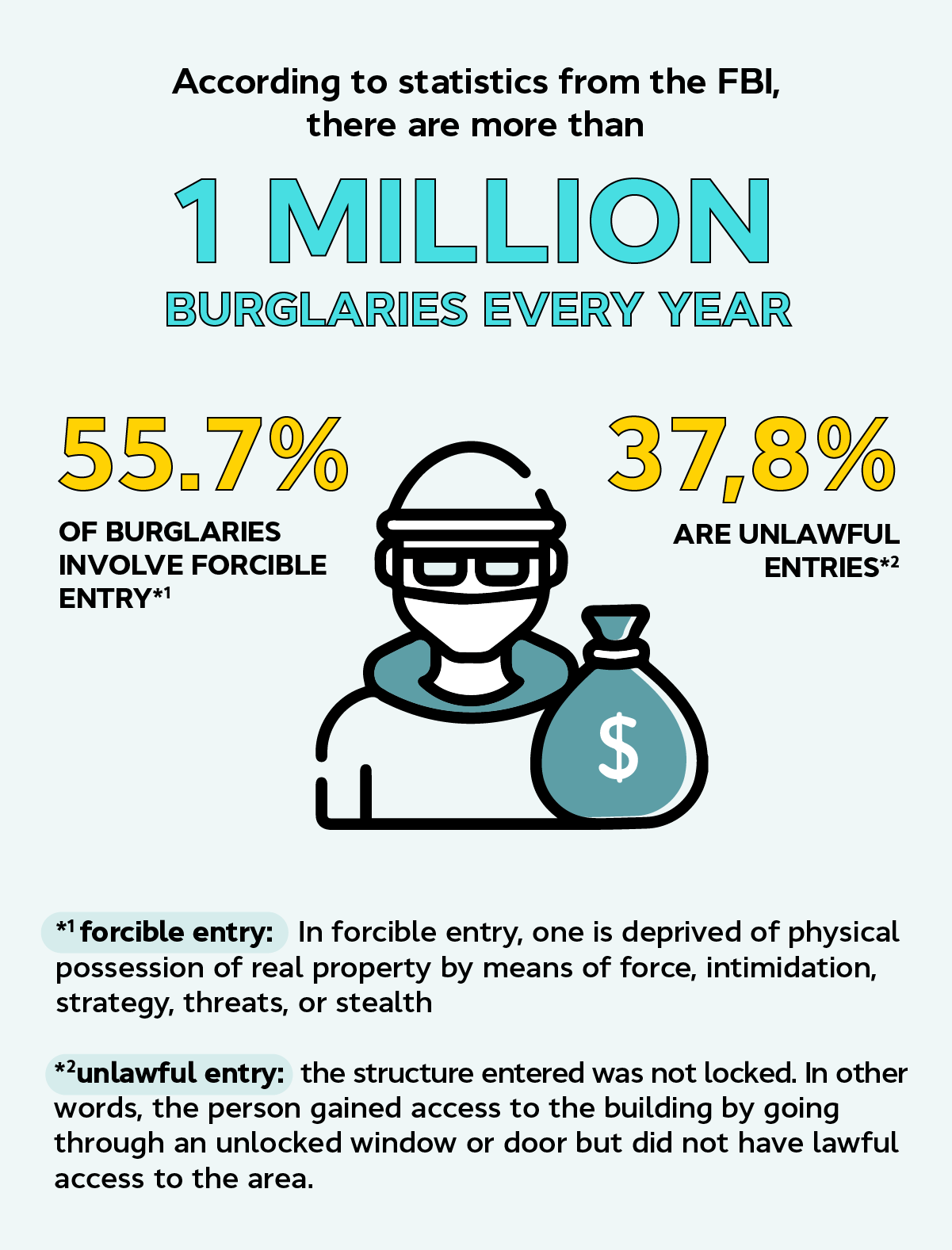
Walking into your house to discover you have been burgled will leave most people feeling violated. The idea of someone invading your privacy or safe space and going through your personal belongings can be traumatic.
In this article, we’ll go through some important considerations you need to know about homeowners insurance claims for theft.
What to Know About Theft Claims
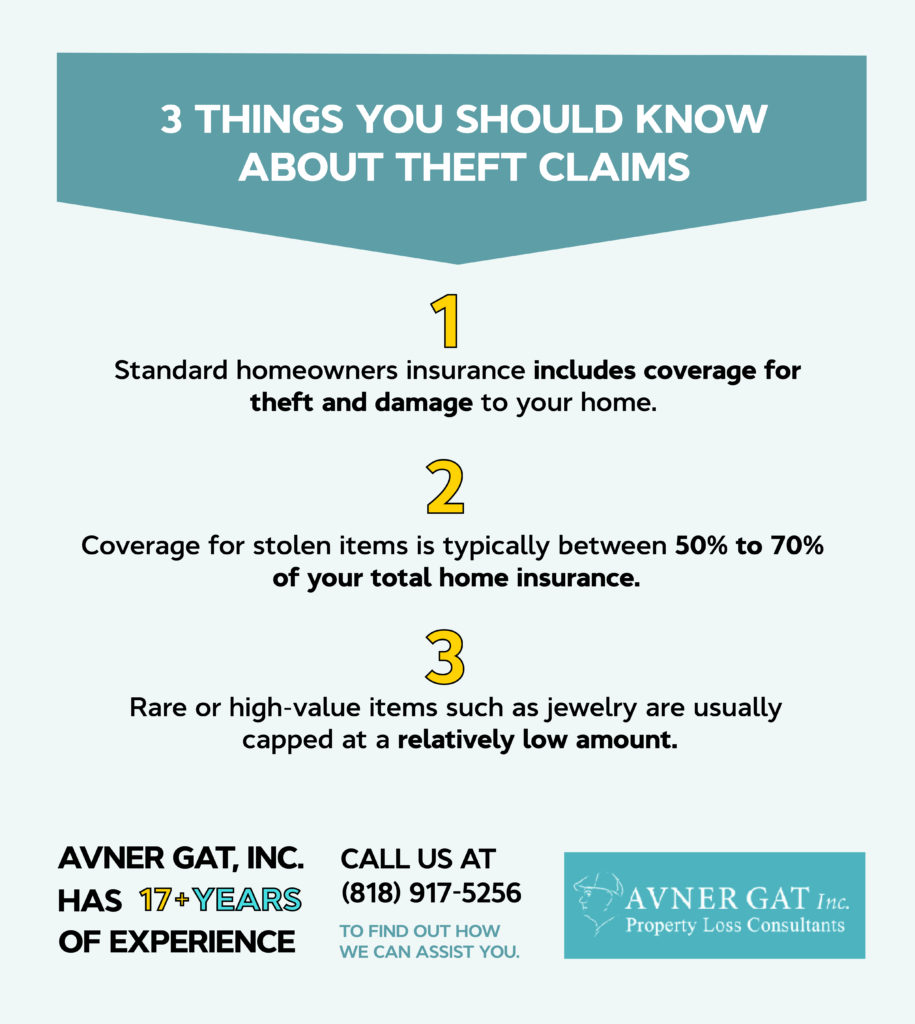
Homeowners insurance typically includes coverage for theft and damage to your home due to a break-in. However, this does not necessarily mean you will be compensated in full for all stolen items.
Replacement Cost vs. Actual Cash Value
Your homeowners insurance policy will cover you for either “replacement cost” or “actual cash value.”
Replacement Cost – You are reimbursed for the cost of replacing an item based on how much it currently costs.
For example, if you bought an item 10 years ago for $100 but it currently costs $500, you will be reimbursed $500.
Actual Cash Value – You are reimbursed based on how much your item would sell for today and not the cost of a new one.
Using our above example, if you bought an item 10 years ago for $100 but it’s only worth $50 today, you will only be reimbursed $50.
Note: If your deductible is $500, for example, it does not make sense to submit an insurance claim for either one of the above examples.
Your Homeowners Insurance Policy Has Limits
Most standard homeowners insurance policies will typically provide coverage for your possessions at about 50% to 70% of the amount of insurance you have on your home.
Standard items, such as televisions, furniture, and appliances that are commonly found in most homes will likely be covered in full in the event of a burglary.
Exceptions
The reimbursement of rare or high-value items such as jewelry, collectible coins, art, and cash is typically capped at a relatively low amount. For example, cash is often capped at around $200 and jewelry at $2,000. So if your $10,000 ring is stolen together with $1,000 in cash, you might only be reimbursed $2,000 and $200 respectively.
Tip: Consider adding scheduled personal property coverage (also called a “personal floater”) to your insurance policy to increase your coverage limits on specific high-value items.
Note that homeowners insurance doesn’t cover motor vehicle theft. You need an auto insurance policy to be covered should your car be stolen.
Your insurance agent can explain the limits on your coverages.
How Do I File a Homeowners Insurance Claim for Theft?
Notify the Appropriate Authorities
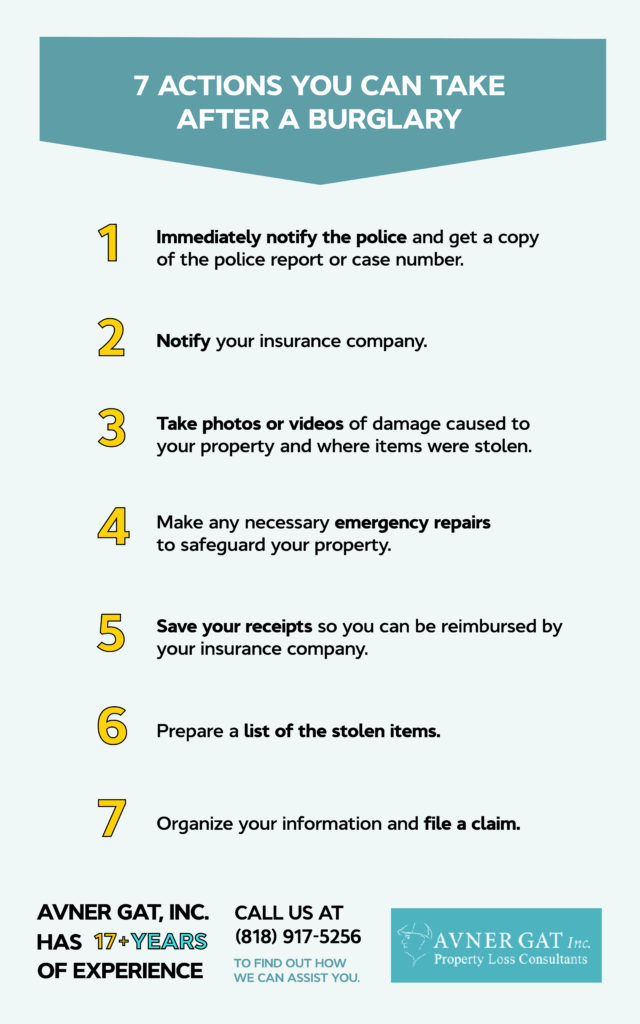
If you experience a break-in or theft, immediately notify the police. You insurance company will typically ask you for a copy of the police report or the case number before they can process your claim.
Make Any Emergency Repairs
When a burglary involves forcible entry, you need to safeguard your property and protect your family from further intrusions. Do the necessary emergency repairs, such as replacing windows or doors that were damaged during the break-in.
Save your receipts so you can be reimbursed by your insurance company.
Organize Your Information and File a Claim
Take photos or videos of damage caused to your property and where items were stolen.
Prepare a list of the stolen items and try to find receipts for them, if possible. The more details you can provide, the better. It includes:
- The brand, model, and the serial number of the stolen item.
- Where and when it was purchased and for how much.
- The estimated replacement cost or cash value of the item.
Note: Always have a home inventory as it can speed up and simplify the claim process. Take photos of the items and store receipts in a safe place.
Investigation and Inspection
Insurance companies do not always investigate theft claims or send someone to inspect your home. However, they might decide to investigate your claim, especially if you don’t have sufficient supporting documentation or if anything looks suspicious.
For example, to verify the ownership and value of your stolen items, you might be asked to submit bank statements, credit card statements, or additional information.
Theft-Proof Your Home
You may not be able to eliminate the risk of being burgled, but by theft-proofing your home, you can make it more difficult for intruders to gain access to your home. And you might also save money on your insurance premium.
Ways you can theft-proof your home include:
- Install a burglar alarm that’s connected to the local police.
- Add motion-detection lights outside your home.
- Use high-quality deadbolt locks on your doors.
- Install video surveillance cameras on your property.
That’s a Wrap
Dealing with a break-in and theft is an unpleasant experience. Unfortunately, filing a claim with your insurance company and getting a fair settlement offer might be an equally unpleasant experience.
By being aware of how the claim process works and what your insurance company may expect of you, as discussed in this article, you should be able to get a faster resolution to your claim.
However, if you have a large or complex claim, hiring a public adjuster to act in your best interests can be a smart move.
An experienced, reputable, and licensed public adjuster can help you overcome the challenges of managing your homeowners insurance claim by yourself. They can assist you in getting the best possible settlement offer you’re entitled to under your insurance policy.
Avner Gat, Inc. has 17+ years of experience as a public adjuster in Southern California. We protect homeowners from the games and fine print that insurance companies are known for.
Call us at (818) 917-5256 to find out how we can help you.